The Boom That Changed Everything
How One Ancient Recipe Blew Up Castles, Crushed Empires, and Built the Modern World

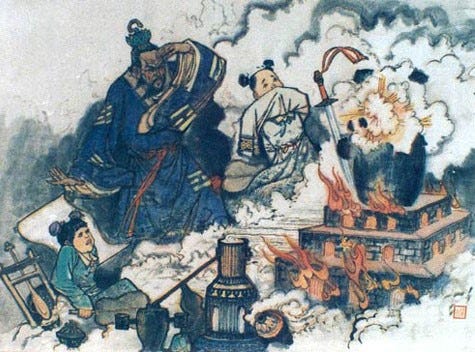
Gunpowder changed everything. It started in China as a happy accident, a failed search for an immortality elixir—but it turned out to be the formula that would reinvent war. That simple mix of saltpeter, sulfur, and charcoal ended up leveling cities, reshaping empires, and forcing kings to rethink how they ruled and fought.
The Chinese invented it and used it in war as early as the 900s, turning bamboo tubes into terrifying fire lances that sprayed flame and metal. By the 1200s, they had metal hand cannons. But China didn’t push the tech to its limits. Why? Because their main threat was fast horsemen, not stone walls. Cannons weren’t much use against nomadic cavalry.
Gunpowder spread west fast, carried by the Mongols, and it didn’t take long before the Islamic world and Europe caught on. By the 1300s, you had Mamluks with hand cannons and European kings like Edward III hauling early bombards into battle. These weapons were crude, loud, and unreliable, but they were here to stay.
Then came Constantinople. In 1453, Ottoman Sultan Mehmed II demonstrated what gunpowder could really do. His massive cannon, the Basilica, smashed the city’s ancient walls and brought down a thousand-year-old empire. It was a wake-up call. Medieval stone walls were now targets, not shields.
That led to a building boom. Engineers across Europe scrambled to reinvent fortress design. The result? The “trace italienne” or star fort: low, thick, angled walls that could soak up cannon fire and shoot back from every angle. Battles dragged on as sieges became the norm. Armies ballooned. Taxes soared. War started shaping the state itself.
But the revolution wasn’t just in Europe. The Ottomans used guns to crush cavalry-heavy enemies like the Safavids at Chaldiran in 1514. In India, Babur’s cannons panicked war elephants and won him the Battle of Panipat, launching the Mughal Empire. In Japan, Oda Nobunaga’s gunners shredded charging samurai at Nagashino in 1575.
Some countries embraced the change. Others backpedaled. After unifying, Japan put aside muskets to preserve samurai honor. The result? When Western ships arrived centuries later, Japan had to scramble to catch up.
Meanwhile, in Europe, commanders like Maurice of Nassau turned gun drills into science. Soldiers lined up and fired in coordinated volleys. Gustavus Adolphus made his armies smaller, faster, and deadlier. These weren’t mobs of farmers. These were trained professionals.
At sea, war changed, too. Ships like HMS Victory carried dozens of heavy cannons, turning naval battles into floating slugfests. Nations with strong navies and better guns ruled the oceans—and built empires.
By the 1800s, guns were faster, longer-ranged, and deadlier. Machine guns arrived. At Omdurman in 1898, British troops mowed down thousands of Mahdist warriors with modern rifles and Maxim guns. The message? Old tactics stood no chance against modern firepower.
What can we learn?
1. Tech isn’t enough. A musket doesn’t win a war, a trained musketeer does. Drill, discipline, and logistics matter more than the gear.
2. Adapt or lose. The Ottomans fell behind when they stopped modernizing. The samurai faded when they were sidelined by guns. The ones who adjusted survived.
3. Forts aren’t forever. Cannon made castles useless. Then forts evolved. But no defense is unbeatable. Innovation cuts both ways.
4. War shapes the state. Big guns needed big money. That meant taxes, armies, bureaucracy, and the birth of the modern state.
5. People still matter. Fear, courage, belief, those didn’t go away. Leaders who trained and inspired their troops won more than those with just better tools.
Gunpowder rewrote the rules. But not just because it was explosive. Because the people who used it thought differently. They trained harder. They built smarter. They fought with a new kind of mindset. That’s the real revolution.
In war, it’s not the strongest who survive. It’s the ones who adapt.